
Bolted, cold forged or roll thread: choosing a rebar coupler
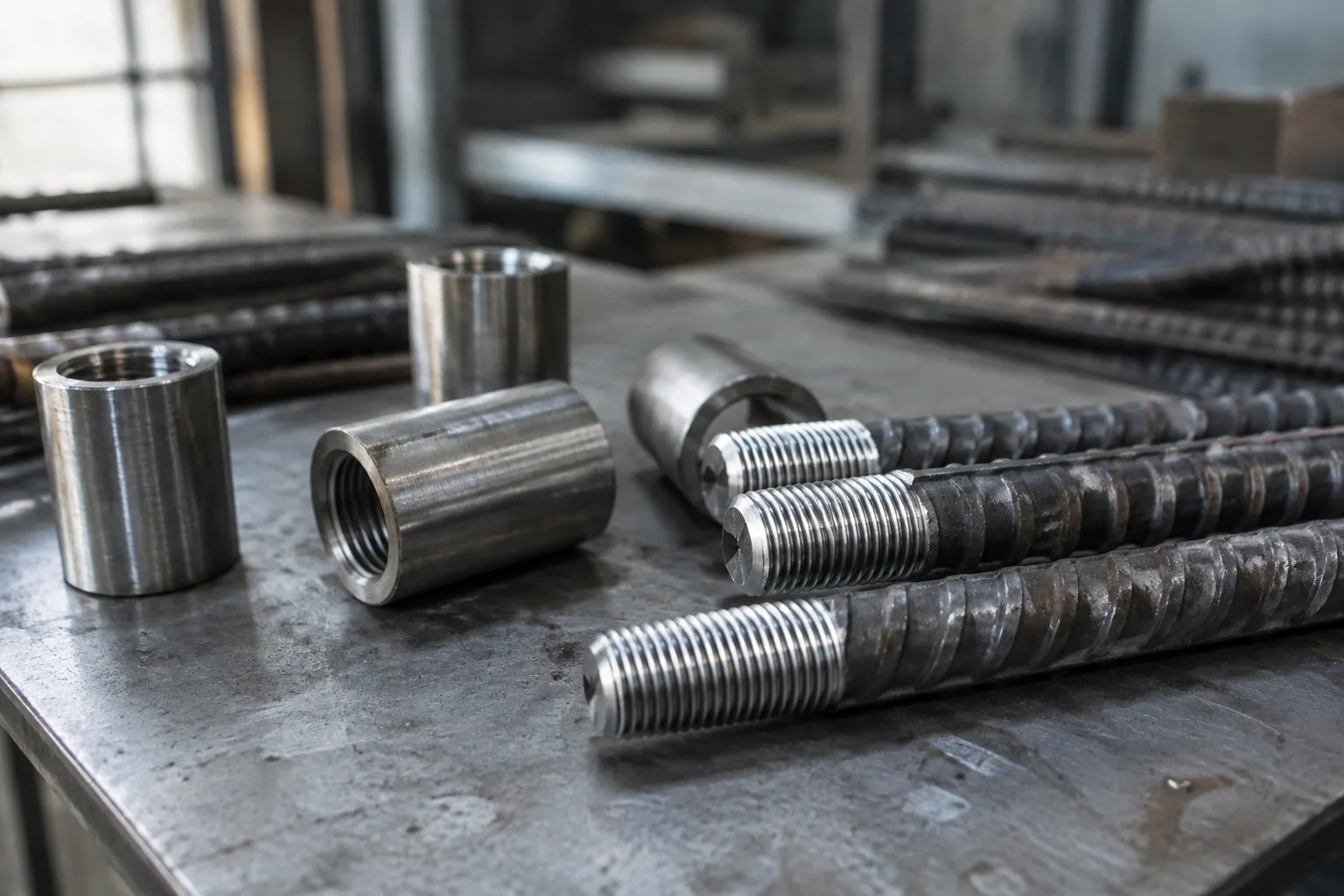
Three ways to join two bars end to end. The choice is usually settled by where the work can happen, not by the joint itself.
That is the part worth deciding early, because it is the part that stops being a choice once the steel is cut and delivered.
Bolted couplers need no preparation and no machine
A Bolted Rebar Coupler needs nothing done to the bar at all. It goes over two plain ends and is tightened onto them. On a Lock Shearing Bolted Coupler the bolt heads shear off at the point of correct tightening, so the installer does not have to judge it and an inspector can see from across the deck which joints are finished.
That makes bolted the method for work that could not be planned. A remedial joint. A bar that was cut short. A connection into steel that is already in position. It is also the method for a site with no power and nowhere to set a machine up.
Cold forged and roll thread need a prepared end
The other two prepare the bar first, on a Rebar Cold Forging Machine or a Rebar Roll Thread Machine, and then thread it. The coupler itself is a plain sleeve that screws onto both ends. The joint is smaller than a bolted one, which matters in a congested cage where the concrete still has to find its way through.
The difference between the two is what happens before the thread is formed. Cold forging upsets the end of the bar first, so the thread sits in a thickened section. Roll threading forms the thread by displacing metal rather than cutting it away. Both are workshop operations. Neither is something to start on site on a Friday afternoon.
Sizes, and the one that holds up a pour
We hold couplers from 16mm through to 40mm. Size is rarely what decides the method, but it is worth reading the bar schedule against what is actually in stock, because a single joint in an unusual size can hold up a pour that everything else was ready for.
- Bolted, for unplanned joints and sites without a machine
- Cold forged, where the bar end can be prepared in a controlled area
- Roll thread, where the same is true and a rolled thread is preferred
- Grouted, for precast connections, where the bar is set into a filled sleeve
The method is chosen by where the bar end can be prepared, not by the joint itself.
If your team has never watched a prepared end handled properly from the machine to the cage, that is the gap worth closing before the next order rather than after it.